Shift-work Disorder

Disrupted sleep, drained energy, and a body out of sync.

What is Shift-work Disorder?

Shift Work Disorder occurs when your work schedule conflicts with your body’s natural sleep-wake cycle, known as the circadian rhythm. This internal clock is regulated by light and darkness, priming you to be awake during the day and asleep at night. When you work night shifts, early mornings, or rotating schedules, your body struggles to adjust—leading to chronic sleep disruption and daytime impairment.

Symptoms

People with SWD often experience:

  • Insomnia: Difficulty falling asleep or staying asleep during the day
  • Excessive sleepiness: Feeling drowsy or fatigued during work hours
  • Poor concentration and slower reaction times
  • Mood disturbances: Irritability, anxiety, or depression
  • Headaches and general lack of energy
  • Reduced performance and increased risk of errors or accidents

Causes

SWD is caused by a misalignment between your work schedule and your circadian rhythm. This mismatch prevents the body from getting consistent, restorative sleep. Common triggers include:

  • Night shifts
  • Rotating shifts
  • Early morning shifts
  • Extended work hours
  • Frequent changes in schedule

All things considered, not everyone who works irregular hours develops SWD, but those who do often struggle to adapt and accumulate sleep debt over time.

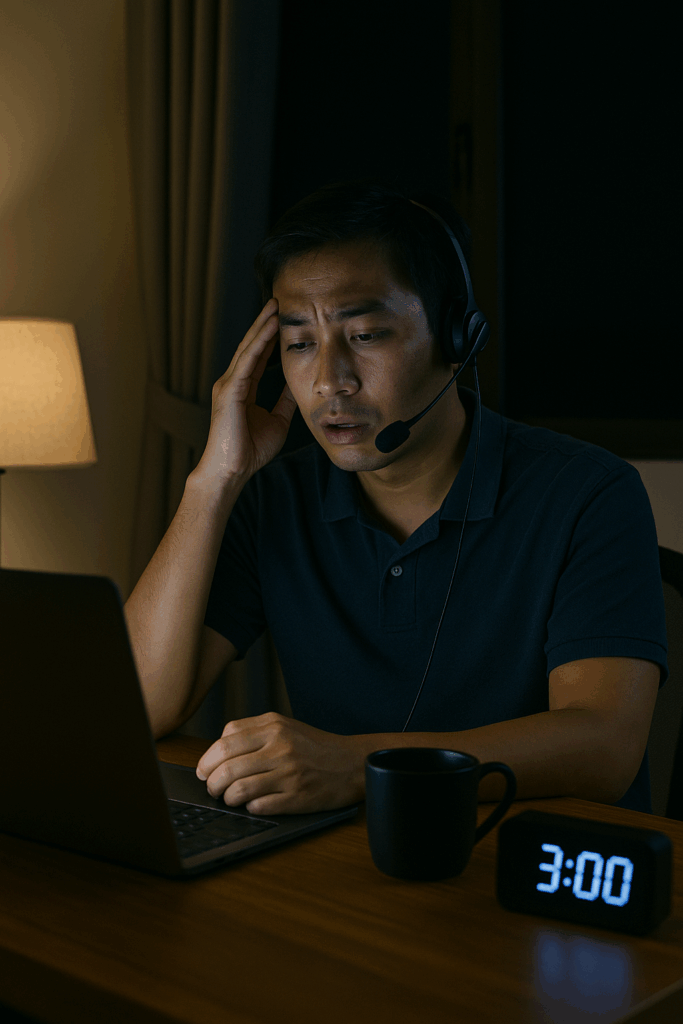
If you or someone you know experiences these symptoms, a consultation with a sleep specialist for a sleep study can be the first step toward relief.

Feeling exhausted the moment you wake up isn’t just frustrating—it could be a sign your sleep isn’t truly restorative. Sleep disorders like sleep apnea or insomnia often go unnoticed but silently drain your energy.
To find out more about this problem and our solutions, click the button below.

WhatsApp Message

We're available on WhatsApp
Mon-Sat 8am to 5pm

Call Us

You may reach us at +63 917 114-2436

Book an Appointment

Schedule a meeting with us

Lorem ipsum dolor sit amet, consectetur adipiscing elit. Ut elit tellus, luctus nec ullamcorper mattis, pulvinar dapibus leo.